Server data center strategy shaping modern IT infrastructure
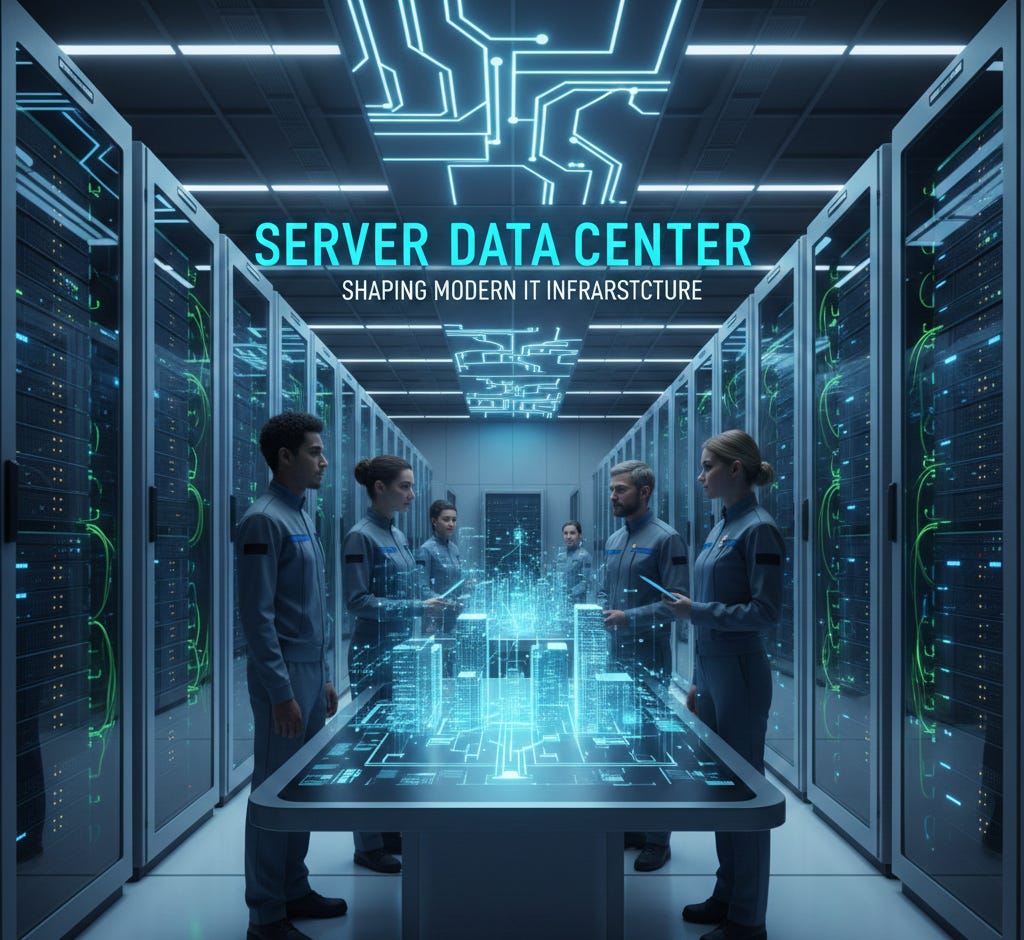
Server data center

Introduction
Digital transformation has redefined how organizations design, deploy, and scale technology environments. At the heart of this evolution lies the server data center, a foundational element that supports applications, storage, networking, and enterprise workloads. As businesses expand across geographies and adopt cloud driven models, understanding the role of the server data center becomes essential for sustainable growth.
While many companies use the terms interchangeably, the distinction and relationship between a server and a data center significantly impact infrastructure strategy. A modern server data center environment is not simply about hardware placement. It reflects architectural planning, operational resilience, and long term scalability. Enterprises that clarify this structure can optimize performance while controlling operational costs.
Understanding the role of the server data center
A server is a computing system designed to process requests and deliver services to other machines. A data center, on the other hand, is the physical or virtual facility that houses servers along with networking equipment, storage systems, cooling mechanisms, and security frameworks. Together, they create the integrated server data center ecosystem that powers enterprise applications.
The efficiency of a server data center determines how reliably digital services are delivered to customers. From hosting websites to managing enterprise resource planning systems, this infrastructure ensures uninterrupted access to critical applications. As organizations migrate toward hybrid and cloud environments, the concept of a server data center expands beyond physical buildings into distributed architectures.
Modern enterprises must evaluate how their server data center supports data processing demands, regulatory compliance, and performance requirements. Infrastructure planning now includes virtualization, automation, and software defined networking, enabling businesses to achieve greater agility and responsiveness.
Architectural considerations in a server data center environment
Designing an effective server data center requires careful planning across multiple layers. Hardware selection, network topology, storage architecture, and redundancy mechanisms all contribute to system reliability. Enterprises must align their server data center design with anticipated workloads and growth projections.
Scalability is a central factor. As user traffic and data volumes increase, the server data center must accommodate expansion without compromising performance. Cloud integration has become a strategic approach, allowing organizations to extend their server data center capacity dynamically while maintaining control over critical workloads.
Energy efficiency also influences architectural decisions. Cooling systems, power distribution, and rack optimization play a significant role in operational sustainability. A well designed server data center reduces energy consumption while delivering consistent computational power.
Security remains another cornerstone of infrastructure strategy. Physical safeguards, network segmentation, encryption protocols, and monitoring tools strengthen the resilience of the server data center. In an era marked by cyber threats, organizations must ensure that both servers and the broader data center environment adhere to strict security standards.
Operational excellence and performance optimization
Maintaining a high performing server data center demands continuous monitoring and optimization. Performance metrics such as latency, uptime, throughput, and resource utilization provide insights into operational health. By analyzing these indicators, IT teams can proactively address bottlenecks within the server data center.
Automation enhances efficiency across infrastructure management. Configuration management tools and orchestration platforms streamline updates and deployments within the server data center. This reduces manual intervention and minimizes the risk of human error.
Disaster recovery planning further reinforces the resilience of the server data center. Backup systems, failover clusters, and geographically distributed facilities ensure business continuity even during unexpected disruptions. Enterprises that invest in robust continuity strategies strengthen trust among customers and stakeholders.
As digital ecosystems become increasingly complex, observability tools offer deeper visibility into server data center operations. Real time dashboards and predictive analytics enable IT leaders to anticipate potential issues and maintain optimal performance levels.
Cloud transformation and the evolving server data center
The rise of cloud computing has transformed perceptions of the traditional server data center. While on premises facilities remain vital for certain workloads, hybrid and multi cloud strategies extend infrastructure capabilities. Organizations now integrate public cloud platforms into their server data center frameworks to achieve flexibility and scalability.
Virtualization technologies have further reshaped the server data center landscape. By abstracting physical hardware into virtual machines and containers, businesses maximize resource utilization and reduce hardware dependencies. This evolution supports faster deployment cycles and improved operational agility.
Edge computing introduces another dimension to the modern server data center. As applications demand lower latency and localized processing, distributed mini data centers complement centralized facilities. Together, they form a cohesive server data center ecosystem capable of supporting real time analytics and connected devices.
Despite these advancements, governance remains essential. Enterprises must manage compliance, data sovereignty, and integration complexities across their server data center environments. Strategic oversight ensures that technological innovation aligns with regulatory and organizational standards.
Strategic value of investing in a resilient server data center
A thoughtfully designed server data center delivers more than technical stability. It becomes a strategic asset that enables innovation and competitive differentiation. Reliable infrastructure supports rapid application development, seamless customer experiences, and scalable digital services.
Cost optimization is another key benefit. By consolidating resources and leveraging automation, organizations can reduce overhead while improving efficiency within the server data center. Transparent performance metrics allow decision makers to allocate investments effectively and prioritize modernization initiatives.
The future of enterprise technology will continue to revolve around adaptable infrastructure models. As artificial intelligence, big data analytics, and Internet of Things ecosystems expand, the server data center will evolve to meet higher processing demands. Forward looking enterprises recognize that infrastructure decisions today shape digital capabilities tomorrow.
In a world defined by connectivity and constant innovation, the server data center remains the backbone of digital transformation. By aligning architecture, security, scalability, and operational excellence, organizations create resilient environments that sustain growth and technological advancement. A strategic approach to the server data center ensures that businesses are prepared not only for current challenges but also for the opportunities of an increasingly data driven future.