Server Room vs Data Center Key Differences for Modern IT Needs
Server Room vs Data Center

Introduction
When businesses begin scaling their IT infrastructure, one question often comes up: should they rely on a server room or invest in a data center? The discussion around server room vs data center is more relevant today than ever, especially as companies handle increasing volumes of data and demand higher system reliability.
At first glance, both may seem similar. After all, both store servers and support business operations. But when you look closer, the differences between a server room and a data center become significant. Understanding server room vs data center helps organizations make smarter decisions based on their size, growth plans, and operational needs.
Understanding Server Room vs Data Center in Simple Terms
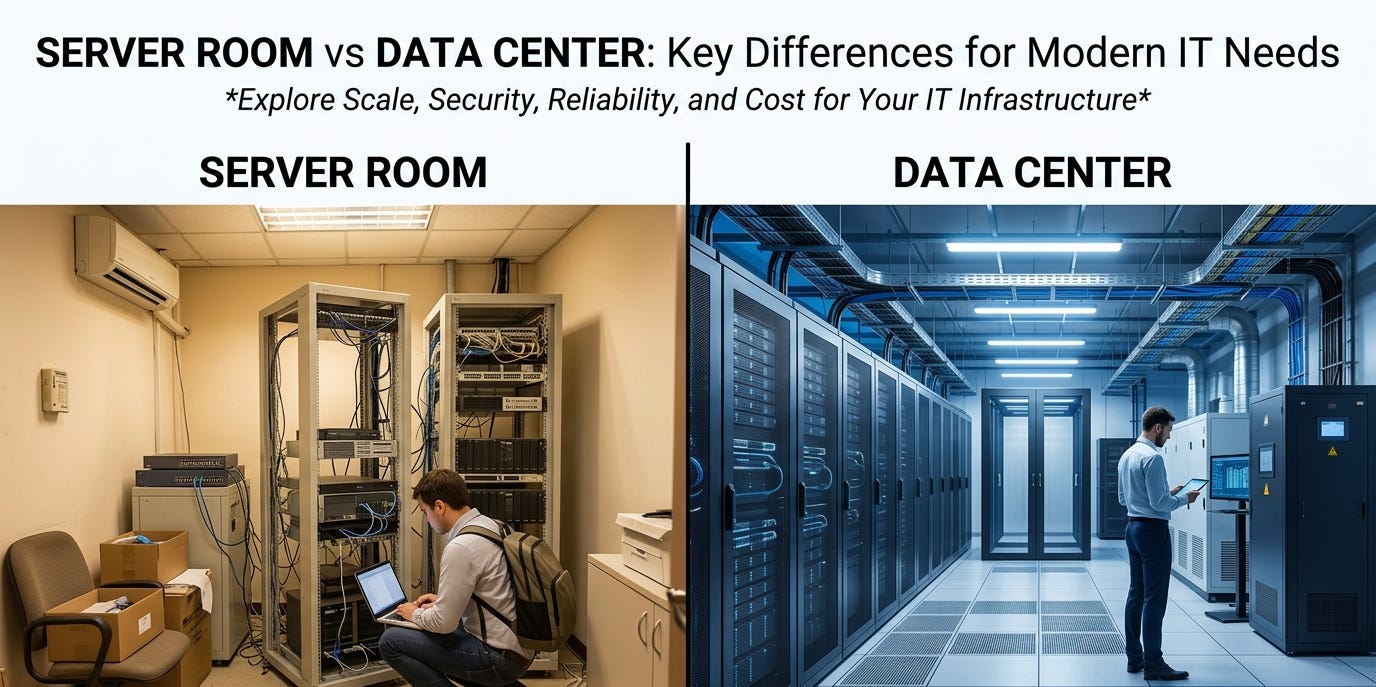
To truly grasp server room vs data center, it helps to start with the basics. A server room is typically a dedicated space within an office where servers and networking equipment are stored. It’s often designed for smaller operations and limited workloads.
On the other hand, a data center is a purpose-built facility designed to house a large number of servers and systems. When comparing server room vs data center, the scale is one of the most obvious differences. Data centers are built for performance, redundancy, and scalability, while server rooms are often more modest in their setup.
This distinction becomes important as businesses grow. What works as a server room in the early stages may not be sufficient in the long run, making the server room vs data center decision a strategic one.
Infrastructure Differences in Server Room vs Data Center
One of the biggest contrasts in server room vs data center lies in infrastructure. A server room usually relies on basic cooling systems, standard power supply, and minimal redundancy. While this setup can support small workloads, it may struggle under increased demand.
In comparison, a data center is designed with advanced infrastructure. It includes specialized cooling systems, backup power sources, and robust network connectivity. When evaluating server room vs data center, these features make data centers far more reliable for mission-critical operations.
Another important factor is physical security. A server room may have limited access controls, while a data center often includes multiple layers of security, such as biometric access and continuous monitoring. This makes a clear difference in the server room vs data center comparison, especially for businesses handling sensitive data.
Scalability and Performance Considerations
As organizations grow, scalability becomes a top priority. This is where the discussion of server room vs data center takes on greater importance. A server room has physical and technical limitations that can make scaling difficult.
Adding more servers to a server room may lead to overheating, power constraints, and reduced efficiency. In contrast, a data center is built to scale. It allows businesses to expand their infrastructure without compromising performance.
Performance is another critical factor in server room vs data center decisions. Data centers are optimized for high availability and low latency, ensuring that applications run smoothly even under heavy loads. Server rooms, while sufficient for smaller operations, may not deliver the same level of performance.
Cost Implications of Server Room vs Data Center
Cost is often a deciding factor when comparing server room vs data center. At first, a server room may seem like the more affordable option. It requires less initial investment and can be set up within existing office space.
However, the long-term costs of maintaining a server room can add up. Energy consumption, cooling requirements, and hardware maintenance can become expensive over time. When evaluating server room vs data center, it’s important to consider these ongoing expenses.
Data centers, while requiring higher upfront investment or subscription costs, often provide better efficiency and reliability. Many businesses find that outsourcing to a data center reduces operational complexity and improves overall cost management.
Server Room vs Data Center for Security and Compliance
Security is a major concern for modern businesses, especially those dealing with sensitive or regulated data. The server room vs data center comparison highlights significant differences in this area.
Server rooms may lack advanced security measures, making them more vulnerable to physical and cyber threats. In contrast, data centers are designed with strict security protocols and compliance standards in mind.
For industries that require regulatory compliance, such as finance or healthcare, the choice between server room vs data center becomes even more critical. Data centers often provide the certifications and controls needed to meet these requirements, reducing the burden on businesses.
Choosing Between Server Room vs Data Center
Deciding between server room vs data center depends on several factors, including business size, budget, and future growth plans. Small businesses with limited IT needs may find a server room sufficient for their operations.
However, as demand increases, the limitations of a server room become more apparent. This is when many organizations transition to a data center. The flexibility and reliability offered by data centers make them a preferred choice for growing businesses.
The server room vs data center decision should also consider long-term goals. Investing in scalable infrastructure early can prevent costly upgrades and disruptions later on.
The Future of IT Infrastructure
The conversation around server room vs data center is evolving as technology advances. Cloud computing and hybrid solutions are changing how businesses approach infrastructure.
While server rooms still have their place, the trend is shifting toward data centers and cloud-based solutions. These options provide greater flexibility and allow businesses to adapt quickly to changing demands.
In the future, the server room vs data center debate may become less about choosing one over the other and more about finding the right balance. Hybrid approaches that combine on-premise and cloud infrastructure are becoming increasingly popular.
Conclusion
Understanding the differences between a server room and a data center is essential for making informed IT decisions. The comparison of server room vs data center goes beyond simple definitions. It involves evaluating infrastructure, scalability, cost, security, and long-term goals.
While server rooms may work for smaller setups, data centers offer the reliability and flexibility needed for modern business environments. By carefully considering the server room vs data center factors, organizations can choose a solution that supports both current needs and future growth.
In the end, the right choice is not just about technology. It’s about creating a stable and scalable foundation that allows businesses to thrive in an increasingly digital world.